
Education has evolved significantly over the past decade. With the rapid growth of technology, students now have two major learning options: online learning and traditional classroom learning. Both systems aim to provide knowledge and skills, but they differ in structure, flexibility, interaction, and overall experience. Understanding the comparison between online learning and traditional learning helps students choose the method that best suits their needs and goals.
Online learning is based on digital platforms where students attend classes through the internet. Lectures may be live or recorded, and study materials are provided in digital form. On the other hand, traditional learning takes place in physical classrooms where students and teachers interact face-to-face. The classroom environment includes direct communication, physical presence, and scheduled lessons at specific times.
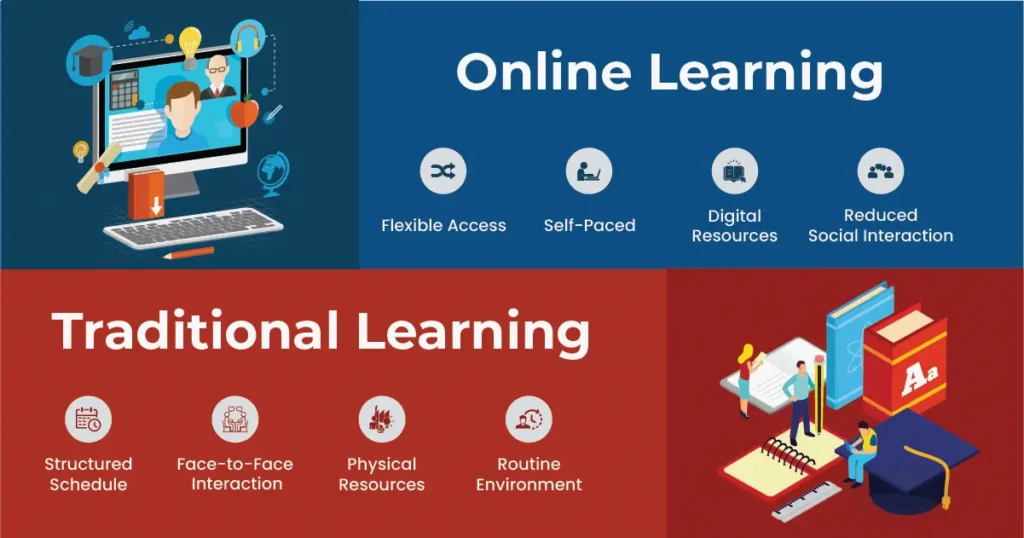
One of the biggest differences between online and traditional learning is flexibility. Online learning offers greater freedom because students can often choose their study time and location. Recorded lectures allow learners to pause, rewind, and review difficult concepts. This flexibility is especially helpful for students who are working part-time or managing other responsibilities. In contrast, traditional learning follows a fixed schedule. Students must attend classes at specific times, which may limit flexibility but also helps maintain discipline and routine.
Interaction is another important factor in this comparison. Traditional classrooms provide direct face-to-face interaction with teachers and classmates. Students can ask questions instantly, participate in discussions, and engage in group activities more naturally. This environment often improves communication skills and teamwork. Online learning, although it includes video calls and discussion forums, may sometimes feel less personal. Some students may find it harder to stay engaged without physical presence.
Cost is also a key difference. Online learning is generally more affordable because students save money on transportation, accommodation, and printed materials. Many online courses are free or offer low-cost certificates. Traditional education, especially in universities, can be more expensive due to campus facilities, infrastructure, and additional expenses.
Another point of comparison is learning environment and distractions. In traditional classrooms, the environment is structured specifically for learning, which reduces distractions. Teachers can monitor students directly and maintain classroom discipline. In online learning, students often study from home where distractions such as social media, family interruptions, or noise may affect concentration. This means online learning requires stronger self-discipline and time management skills.
When it comes to skill development, both methods have advantages. Online learning helps students develop digital skills, technical knowledge, and self-motivation. It prepares learners for remote work environments and modern digital careers. Traditional learning, however, enhances social interaction, communication abilities, and collaborative skills through physical group activities and presentations.
Effectiveness depends largely on the student’s personality and learning style. Self-motivated and independent learners often perform well in online learning environments. Students who prefer structured guidance and direct supervision may benefit more from traditional classroom education. Neither method is universally better; each has strengths and limitations.
In conclusion, the comparison between online learning and traditional learning shows that both systems offer unique benefits and challenges. Online learning provides flexibility, affordability, and accessibility, while traditional learning offers direct interaction, structured environments, and stronger social engagement. The best choice depends on individual goals, discipline level, and learning preferences. In many cases, a blended approach that combines both methods can provide the most balanced and effective educational experience.